

Since the launch of the V-Clamp procedure, partner centers worldwide have been committed to advancing the successful clinical application of this technique, providing effective treatment for MMVD-affected dogs who are not candidates for open-heart surgery.
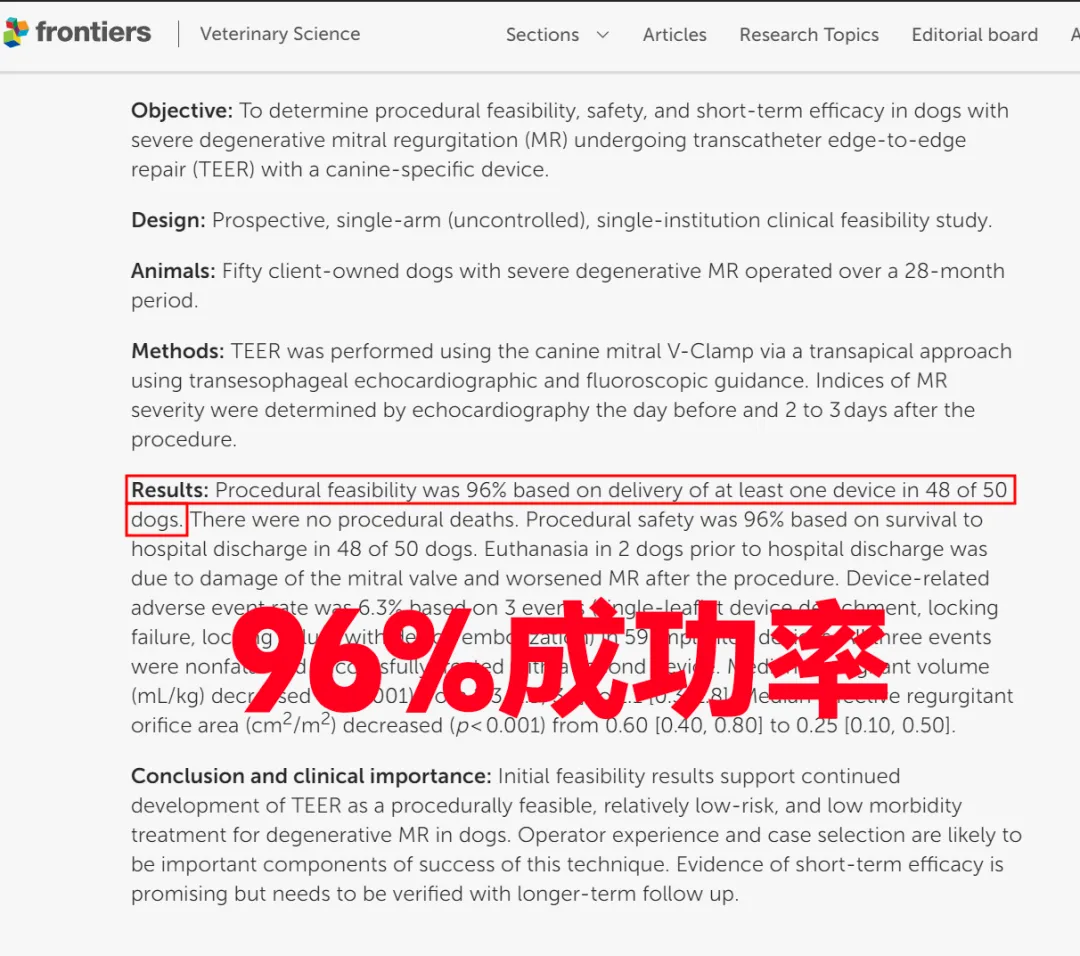
Previously, a research team at Colorado State University validated the effectiveness of V-Clamp with a 96% surgical success rate, based on four to five years of clinical experience.
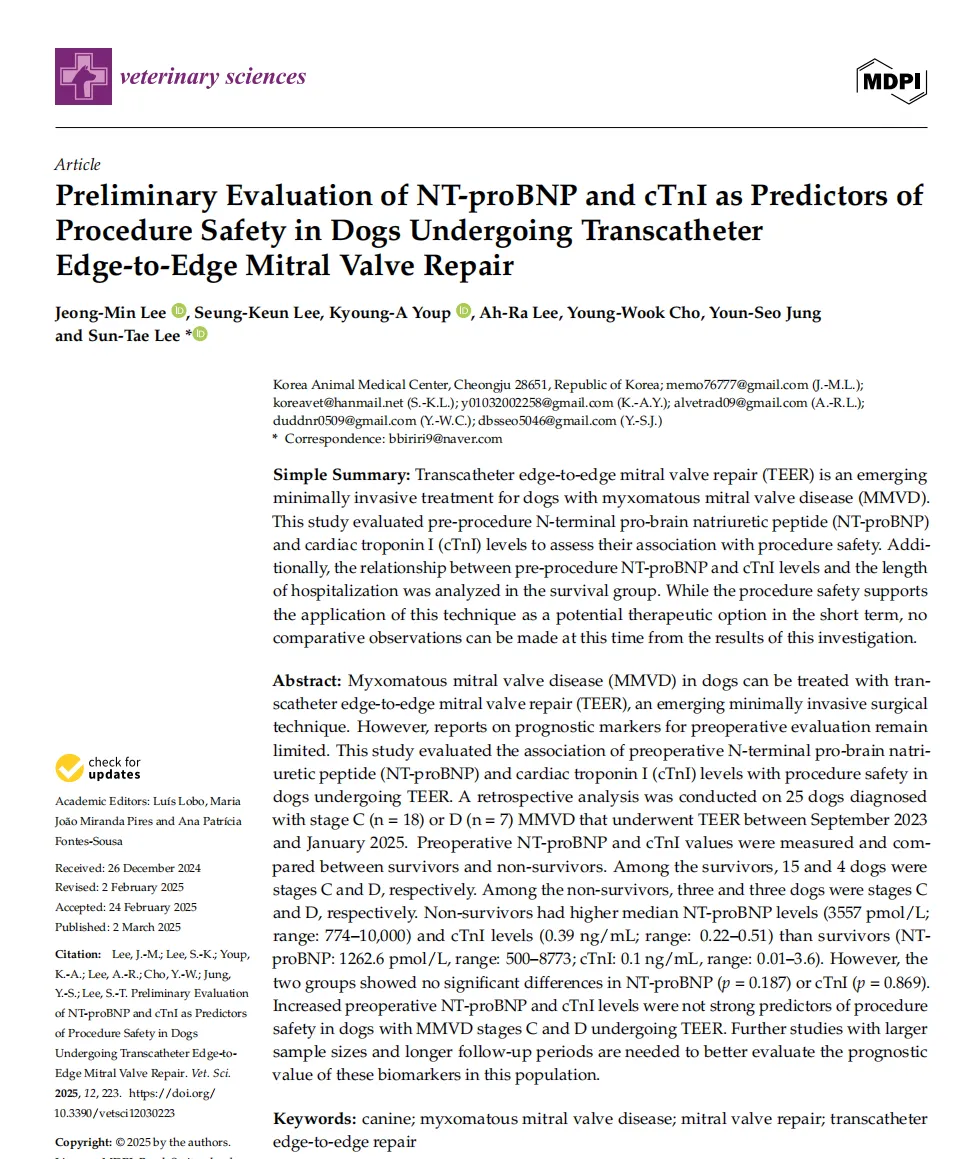
Recently, Hongyu’s Korean partner center, KAMC, conducted the first retrospective study evaluating the correlation between preoperative biomarker levels (NT-proBNP and cTnI) and clinical outcomes in MMVD dogs undergoing TEER. This study, based on clinical data collected since September 2023, aims to enhance V-Clamp safety and refine patient selection criteria for the procedure.
In addition to clinical treatment, KAMC’s doctors are focusing on improving the accuracy of cardiac assessments to ensure that dogs with unsuitable heart function are not subjected to TEER. This approach aims to reduce postoperative mortality and improve surgical success rates.
Assessing a patient’s risk level before surgery is crucial for both clinical decision-making and preoperative communication with pet owners. In human medicine, preoperative NT-proBNP and baseline cardiac troponin I (cTnI) levels have been shown to correlate with perioperative mortality. However, as TEER remains an emerging technique in veterinary medicine, no studies have yet established a clear link between these biomarkers and postoperative survival rates in dogs.
To bridge this gap, the KAMC team initiated a study to evaluate the relationship between preoperative NT-proBNP and cTnI levels and postoperative safety in MMVD-affected dogs undergoing TEER.
Study Population
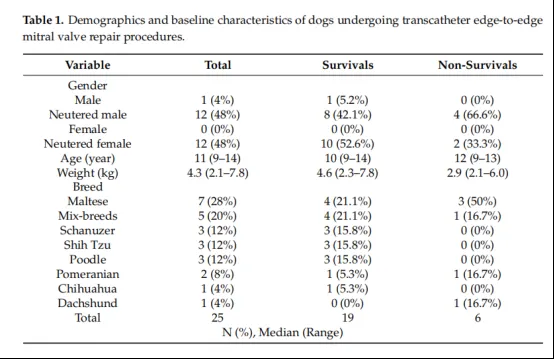
The study included 25 MMVD dogs that underwent transcatheter edge-to-edge repair (TEER) between September 2023 and January 2025. Among them: 18 dogs were classified as Stage C, and 7 dogs were classified as Stage D. The median age of the cohort was 11 years (range: 9–14 years).
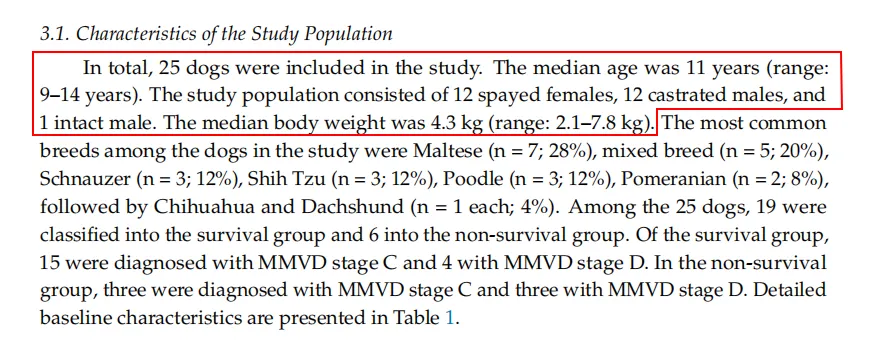
The study included 12 spayed female dogs, 12 spayed male dogs, and 1 intact male dog. The median weight of the dogs was 4.3 kg (range: 2.1–7.8 kg). The most common breeds in the study were Maltese (n=7, 28%), mixed-breed dogs (n=5, 20%), Schnauzer (n=3, 12%), Shih Tzu (n=3, 12%), Poodle (n=3, 12%), and Pomeranian (n=2, 8%). The remaining dogs included Chihuahua and Dachshund (each n=1, 4%).
Among the 25 dogs, 19 were classified into the survival group, while 6 were classified into the non-survival group. In the survival group, 15 dogs were diagnosed with MMVD Stage C, and 4 dogs with MMVD Stage D. In the non-survival group, 3 dogs were diagnosed with MMVD Stage C, and 3 dogs with MMVD Stage D.
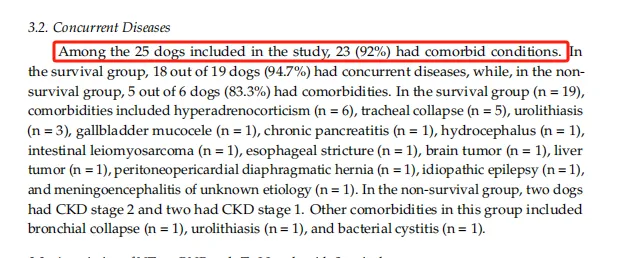
Among the 25 dogs included in the study, 23 dogs (92%) had comorbidities. In the survival group, 18 out of 19 dogs (94.7%) had comorbidities, while in the non-survival group, 5 out of 6 dogs (83.3%) had comorbidities.
In the survival group (n=19), the comorbidities included: Cushing's syndrome (n=6), Tracheal collapse (n=5), Urolithiasis (n=3), Gallbladder mucocele (n=1), Chronic pancreatitis (n=1), Hydrocephalus (n=1), Gastrointestinal smooth muscle tumor (n=1), Esophageal stricture (n=1), Brain tumor (n=1), Liver tumor (n=1), Peritoneal-pericardial diaphragmatic hernia (n=1), Idiopathic epilepsy (n=1), and Meningoencephalitis of unknown origin (n=1).
In the non-survival group (n=6), two dogs had Chronic Kidney Disease (CKD) Stage 2, and two dogs had CKD Stage 1. Other comorbidities in this group included bronchial collapse (n=1), urolithiasis (n=1), and bacterial cystitis (n=1).
Study Objective
The study aimed to assess the relationship between preoperative NT-proBNP and cTnI levels and the safety of TEER surgery, and further analyze the correlation between these biomarkers and length of hospitalization in surviving dogs.
Research Method
The study measured and compared preoperative NT-proBNP and cTnI levels between surviving and non-surviving dogs to explore their impact on surgical safety. All dogs underwent preoperative screening, including complete blood count, serum biochemistry analysis, venous blood gas analysis, electrocardiogram, chest X-ray, transthoracic echocardiogram, transesophageal echocardiogram (TEE), and NT-proBNP and cTnI testing.
All dogs were fasted for 10 hours before blood collection, which was obtained from the jugular vein or cephalic vein. The samples were then tested within one hour using the Vcheck Canine NT-proBNP kit and Vcheck Canine TnI kit (Bionote, Hwaseong, South Korea).
Research Findings
The median NT-proBNP level in non-surviving dogs was 3557 pmol/L (range: 774–10,000), and the median cTnI was 0.39 ng/mL (range: 0.22–0.51), both higher than those in surviving dogs (NT-proBNP: 1262.6 pmol/L, range: 500–8773; cTnI: 0.1 ng/mL, range: 0.01–3.6). However, the differences in NT-proBNP (p=0.187) and cTnI (p=0.869) levels between the two groups were not statistically significant.
Study Conclusion
The results of the study show that elevated preoperative NT-proBNP and cTnI levels are not strong predictors of the safety of TEER surgery for MMVD Stage C and D dogs. This highlights the complexity of prognostic prediction.
Future studies should focus on larger-scale, multi-center cohort studies combined with long-term follow-up data to better understand the interaction between biomarkers, surgical factors, and patient-specific characteristics. Additionally, the influence of comorbidities on preoperative biomarker levels and survival outcomes needs further exploration to enhance the clinical guiding value of these indicators in canine MMVD TEER surgery.
Survival Rate
In this study, 6 out of 25 dogs died postoperatively, resulting in a discharge survival rate of 76% (with 18 Stage C dogs and 7 Stage D dogs). In contrast, a previous study reported a 96% safety rate for TEER surgery, with 48 out of 50 MMVD dogs (in Stages B2, C, and D) surviving to discharge.
This discrepancy may reflect differences in inclusion and exclusion criteria. The previous study excluded dogs with severe pulmonary hypertension (tricuspid regurgitation pressure gradient >80 mmHg), non-cardiac diseases potentially affecting six-month survival, and cases with systemic infections or immune-mediated diseases, while these factors were not excluded in the present study. Additionally, the severity of disease in the two studies may differ—28% of dogs in this study were classified as MMVD Stage D, whereas only 6% were in this stage in the previous study.
In conclusion, future global V-Clamp collaboration centers should strengthen cooperation, integrating larger sample sizes and longer follow-up data to comprehensively evaluate the prognostic value of these biomarkers. This will help optimize surgical safety and success rates, improving the quality of life and life expectancy for affected dogs.
Surgical Time Recommendations
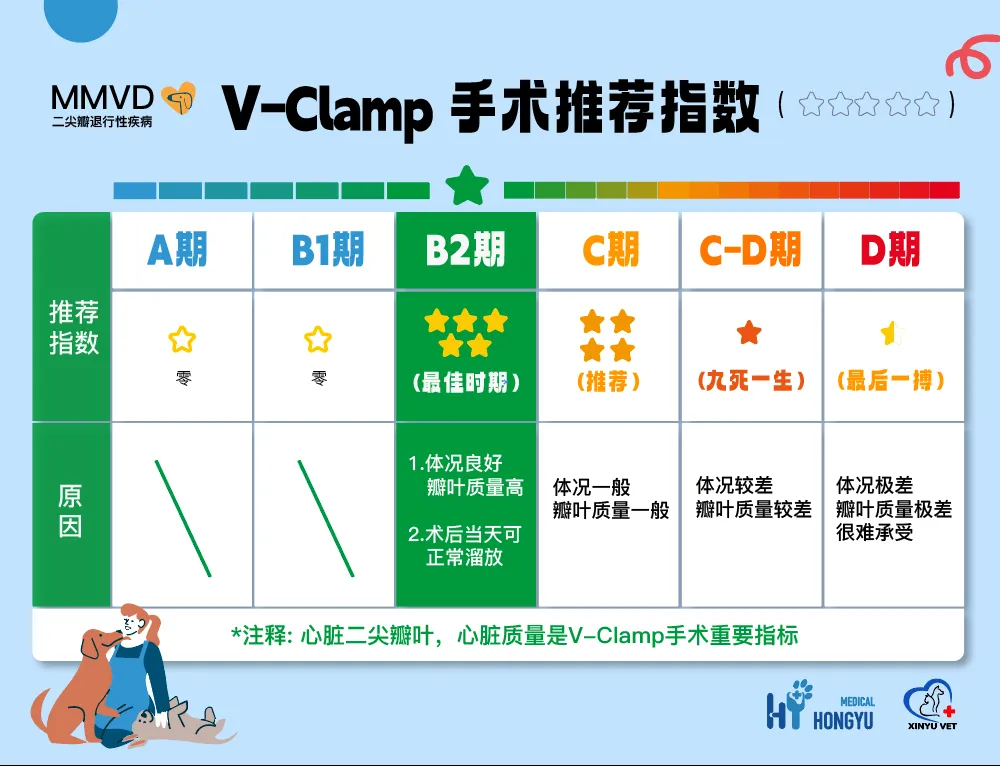
Based on comprehensive data and the clinical experience of veterinarians, Stage B2 surgeries have a higher success probability and lower risk, while Stage C-D and D surgeries involve higher risks.
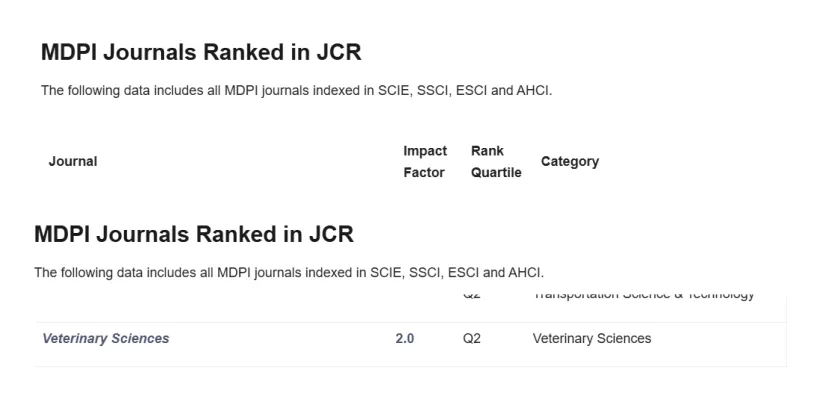
MDPI (Multidisciplinary Digital Publishing Institute) is an open-access academic publishing organization headquartered in Switzerland, established in 1996. MDPI operates numerous academic journals covering a wide range of fields, including natural sciences, engineering, medicine, life sciences, social sciences, and more.
Among its publications, Veterinary Sciences is an open-access, peer-reviewed journal under MDPI, focusing on veterinary research. The journal covers various aspects of animal health, disease prevention, diagnosis, treatment, and other related areas.
NT-proBNP (N-terminal pro-brain natriuretic peptide)
NT-proBNP is a biomarker secreted by the heart, particularly the ventricles, when subjected to increased pressure or volume load. It is a significant cardiac biomarker that helps predict surgical tolerance, assess heart health, and reduce the risk of perioperative complications. Preoperative NT-proBNP testing is especially useful for evaluating cardiac function and perioperative risks in patients with heart disease. The key functions of NT-proBNP include:
Cardiac Load Assessment: Elevated NT-proBNP levels typically indicate excessive cardiac load, such as ventricular pressure increases caused by heart failure, valve diseases, or hypertension.
Postoperative Prognosis Prediction: High NT-proBNP levels may suggest an increased risk of postoperative complications, such as heart failure or low cardiac output syndrome.
Anesthesia and Surgical Risk Assessment: It helps anesthesiologists formulate personalized anesthesia plans to reduce the incidence of cardiovascular events.
cTnI (Cardiac Troponin I)
cTnI is a highly specific biomarker for myocardial injury, primarily used to assess the extent of myocardial damage or necrosis. It is a sensitive marker for early detection of heart disease, preoperative risk assessment, and monitoring postoperative heart health. Both in human and veterinary medicine, cTnI is a crucial tool for evaluating cardiac health. cTnI is a part of the myocardial troponin complex and is normally present only within myocardial cells. When the heart muscle is damaged or necrotic, cTnI is released into the bloodstream, causing an increase in serum concentration. Therefore, it can be used for:
Early Detection of Myocardial Injury: More sensitive than traditional markers like CK-MB, it is useful for early identification of heart damage.
Assessment of Cardiac Diseases: Such as myocarditis, heart failure, myocardial infarction, and post-cardiac surgery or intervention monitoring.
Preoperative Risk Assessment: Elevated cTnI levels before surgery may indicate underlying heart disease, increasing the risk of cardiovascular events during the perioperative period.